Along the Shore
Myrtle Beach & North Myrtle Beach
Explore oceanfront living alongside residential neighborhoods, dining, entertainment, and the everyday conveniences of two distinct beach communities.
Myrtle Beach · North Myrtle Beach · The Grand Strand
Oceanfront homes, neighborhood streets, and a life shaped by the South Carolina coast.

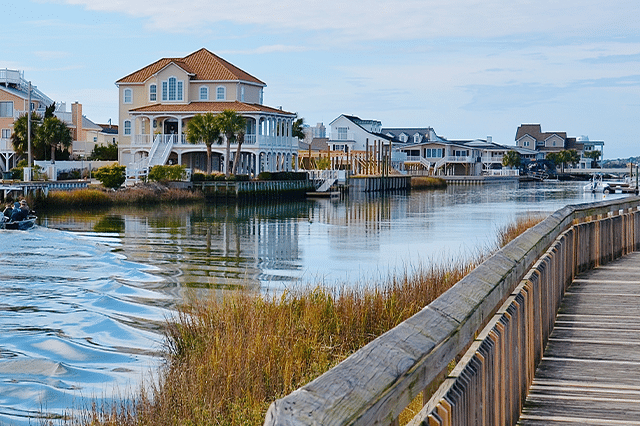
Beyond the Beach
The Myrtle Beach area is more than one stretch of shoreline.
From Myrtle Beach and North Myrtle Beach to Surfside Beach, Murrells Inlet, Little River, and Longs, each community offers a different setting for life on the Grand Strand. You may be looking for an oceanfront condominium, a home near the water, an established neighborhood, or more space farther inland.
Exploring Myrtle Beach area real estate begins with how you plan to use the home. A full-time move, a second home, and a future sale each bring different questions about location, property type, upkeep, and the details of coastal ownership.
Begin with the setting you want: close to the beach, near an inlet or waterway, or in a neighborhood farther inland. Then compare individual properties for the features and ownership costs that matter to you.
Explore the Area
Get a feel for the places that make up our Coastal Carolina market before exploring each community in more detail below.
Along the Shore
Explore oceanfront living alongside residential neighborhoods, dining, entertainment, and the everyday conveniences of two distinct beach communities.
Pier & Inlet
Look south for a beach-town setting in Surfside and the marsh views, waterfront dining, and local character of Murrells Inlet.
North & Inland
Consider Little River’s connection to the water and the wider range of residential settings available farther inland around Longs.
Your Real Estate Advisors for Life
Buying, selling, or getting to know the Myrtle Beach area? Let’s talk about the places and properties that fit your plans.
Your Coastal Carolina Advisors
A move along the Grand Strand comes with questions that go beyond the property itself. Get to know the people helping buyers and sellers navigate the Myrtle Beach area with local perspective and personal attention.
Meet our Coastal Carolina team below.Areas of Expertise
Beach towns, inlet communities, and places a little farther inland all bring something different to life around Myrtle Beach. Get to know the communities of the Grand Strand before deciding where to explore next.
Select a community to view its local guide.
Continues to be a sought-after destination for those looking to enjoy authentic coastal living.
Explore community
Situated just north of Myrtle Beach, Little River offers a relaxed coastal lifestyle with a strong connection to the water.
Explore community
Often referred to as “The Family Beach,” Surfside Beach offers a relaxed, welcoming coastal lifestyle.
Explore community
Just inland from the Grand Strand, Longs offers a quieter, more spacious approach to coastal living.
Explore community
Continues to be a sought-after destination for both full-time residents and second-home buyers.
Explore community
Known for its world-class golf, oceanfront communities, and vibrant dining and entertainment scene.
Explore communityA closer look at the coast
From Myrtle Beach to Murrells Inlet and Little River, the right coastal home depends on how you want to live, what you want to own, and the details of the property itself.
Coastal Carolina real estate, thoughtfully consideredOur coastal community guides focus on the Myrtle Beach and Grand Strand area, including Myrtle Beach, North Myrtle Beach, Surfside Beach, Murrells Inlet, Little River, and Longs. Each offers a different mix of homes, access to the coast, dining, recreation, and everyday conveniences.
They are separate cities with their own neighborhoods and character. Myrtle Beach places you near a broad mix of entertainment, dining, and residential options. North Myrtle Beach includes distinct areas such as Cherry Grove, Ocean Drive, Crescent Beach, and Windy Hill. The best fit depends on the particular street and property, as well as the city name.
Start by comparing the neighborhoods within each community rather than assuming an entire town has one pace. Little River offers a setting near the waterway; Murrells Inlet is known for its inlet, boating, and dining; and Longs offers inland residential options. We can narrow the search by your preferences for privacy, beach access, home style, and daily routine.
No. Coastal Carolina homes include oceanfront properties, homes near the Intracoastal Waterway or inlets, golf community homes, condos, and neighborhoods farther inland. Think about how often you want to reach the beach, whether boating matters to you, and how much space and upkeep you prefer. Those answers can reveal options well beyond the oceanfront.
In addition to the home’s condition and location, review the property’s flood information, insurance quotes, association documents and fees where applicable, maintenance history, and any rules that affect your intended use. For an oceanfront property, also investigate applicable beachfront lines and restrictions before planning alterations. These details can vary considerably from one address to the next.
Requirements and risk depend on the individual property and, when financing, the lender. Look up the address in the FEMA Flood Map Service Center , review the relevant local flood information, and request insurance quotes early in your search. Standard homeowners insurance generally does not cover flood damage, so it is worth discussing coverage even when a lender does not require it.
It depends on the exact address, local zoning, and any homeowners or condominium association rules. For example, the City of Myrtle Beach says most of its traditional residential neighborhoods are not zoned for short-term rentals. Confirm permitted use with the appropriate local government and association before treating rental income as part of a purchase decision.
Yes. Your search can include condos, townhomes, and single-family homes across coastal and inland communities. Compare the full monthly cost, including insurance and any association fees, alongside the location and home itself. We can help you set a practical search area and identify the tradeoffs that matter most to you.
Consider how you plan to use the property, how much maintenance you want to handle, your desired space and privacy, and the total ownership cost. A condo may offer a different maintenance arrangement, while a single-family home may offer more control over the property. Review the specific association documents, insurance, and property condition before deciding.
Begin with a property-specific pricing and presentation plan. Buyers may compare your home with others across several Grand Strand communities, so strong photography and clear information about the home, location, and applicable association details matter. The right approach should reflect your property’s features, condition, and likely buyers rather than rely on a broad coastal label.
Your Real Estate Advisors for Life
Tell us what you are considering. We will help you identify the details to investigate and the communities worth exploring.
ADDRESS 19721 Bethel Church Rd. Cornelius, NC 28031
ADDRESS 19721 Bethel Church Rd. Cornelius, NC 28031
